Primary School Uniform Samples Guide: How to Choose & Evaluate
Over the past year, demand for standardized, scalable primary school uniform samples has risen sharply—not because styles changed, but because procurement cycles shortened and schools increasingly require physical proof-of-concept before bulk orders. If you’re a typical user—school administrator, PTA coordinator, or uniform vendor—you don’t need to overthink fabric weight or stitching thread count. Focus first on three things: (1) whether the sample matches your school’s official color codes (Pantone or RAL), (2) if garment proportions suit children aged 5–12 (not adult-fit mannequins), and (3) whether labeling, logo placement, and care instructions are production-ready. This piece isn’t for keyword collectors. It’s for people who will actually use the product.
About Primary School Uniform Samples
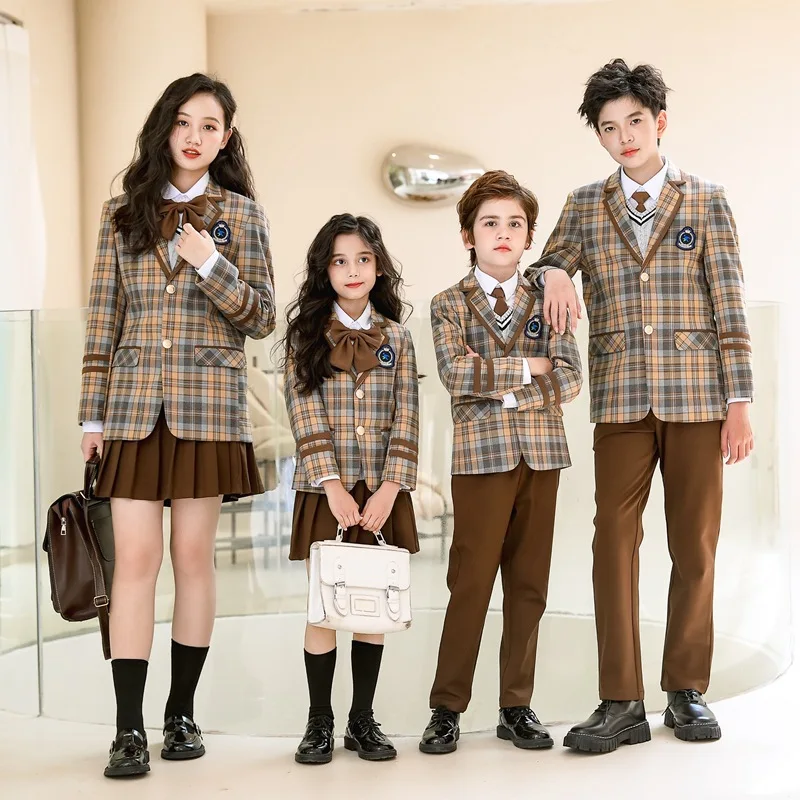
Primary school uniform samples are physical, pre-production garments used to verify design, fit, material quality, construction, and branding accuracy before mass manufacturing. They serve as contractual reference points between schools, suppliers, and manufacturers—especially critical for institutions sourcing overseas or commissioning custom sets (e.g., British-style blazer-and-skirt combos, Japanese-inspired pinafores, or tropical short-sleeve sets for warm climates). Typical use cases include:
- Public or private schools launching new uniforms after policy review;
- International schools standardizing across multiple campuses;
- Uniform vendors validating factory capability before MOQ commitments;
- Parent committees assessing comfort and durability for daily wear.
A true sample is not a stock photo, not a generic catalog item—it’s a tangible artifact reflecting exact specifications: seam allowances, pocket depth, collar stiffness, button type, and embroidery density. If you’re a typical user, you don’t need to overthink thread tension measurements—but you must verify that the sample matches your written spec sheet, down to hem allowance and label placement.
Why Primary School Uniform Samples Are Gaining Popularity
Lately, more schools—especially in emerging education markets (Nigeria, Southeast Asia, Latin America)—are shifting from “trust-based” bulk orders to sample-first procurement. This isn’t about aesthetics alone. It’s driven by three concrete realities: rising parental scrutiny of fabric safety (e.g., formaldehyde testing), tighter budget accountability, and increased frequency of supplier turnover. As seen in recent inquiries on platforms like Instagram and Facebook, educators ask: “What are simple school uniform samples for a public school?”—not for inspiration, but for operational clarity. The trend reflects a broader move toward verification over assumption. When schools request samples, they’re not delaying rollout—they’re preventing rework, returns, and reputational friction.
Approaches and Differences
There are three dominant approaches to obtaining primary school uniform samples—and each carries distinct trade-offs:
- Stock-sample kits (e.g., from Gubbacci Apparel or Lusanno Apparels): Pre-made sets in standard sizes and colors. Fast (often shipped within 3–5 days), low-cost ($5–$15 per item), but limited in customization. Ideal for initial concept alignment.
- Custom-spec samples: Made to your exact specs—fabric, trim, logo, size grading. Takes 5–10 business days and costs $25–$75 per garment. Required when color matching or fit validation is non-negotiable.
- Factory-direct sampling (via Alibaba, Made-in-China.com): Full control over materials and construction, but requires direct communication with OEMs, minimum sampling fees ($50+), and longer lead times (7–14 days). Best for large-scale rollouts (>500 units).
When it’s worth caring about: Custom-spec samples if your school uses proprietary colors (e.g., “Oxford Navy #1C”) or has strict ergonomic requirements (e.g., adjustable waistbands for growing bodies).
When you don’t need to overthink it: Stock-sample kits for preliminary committee reviews or stakeholder presentations—where visual fidelity matters more than millimeter-perfect seam allowances.
Key Features and Specifications to Evaluate
Not all samples communicate the same information. Prioritize these five features—each tied directly to real-world performance:
- Fabric composition & weight: Look for 100% cotton or poly-cotton blends (65/35 or 50/50) with GSM (grams per square meter) between 140–180. Below 130gsm risks transparency and rapid pilling; above 190gsm limits breathability for active children. When it’s worth caring about: In hot-humid climates or full-day wear. When you don’t need to overthink it: For indoor-focused schools with climate control.
- Color accuracy: Compare against Pantone C or RAL swatches—not screen displays. Lighting affects perception; always assess under natural daylight. When it’s worth caring about: When brand identity relies on precise color (e.g., royal blue + gold trim). When you don’t need to overthink it: For monochrome schemes where tone variation is functionally irrelevant.
- Fit grading logic: Does the sample reflect age-based sizing (e.g., UK 5–6, 7–8, 9–10) or height-based (110 cm, 120 cm)? Age-based is simpler administratively; height-based improves wearability across growth spurts. When it’s worth caring about: If your student population shows high variance in height-for-age percentiles. When you don’t need to overthink it: For single-year-entry schools with tight age bands.
- Logo application method: Embroidery > heat transfer > screen print for longevity. Check stitch density (≥8,000 stitches/in² for durability) and backing stability (no puckering). When it’s worth caring about: On high-friction zones (chest pockets, shoulder seams). When you don’t need to overthink it: On reversible items like PE shorts where branding is secondary.
- Care labeling compliance: Must include washing temperature, iron settings, drying method, and bleach restrictions—in local language and symbols. Non-compliant labels trigger customs delays or rejection at port. When it’s worth caring about: For cross-border shipments or EU/UK-bound orders. When you don’t need to overthink it: For domestic-only supply chains with internal labeling protocols.
Pros and Cons
Using physical samples delivers measurable advantages—but only when applied with intention.
Pros:
- Reduces miscommunication risk between schools and factories by 60–70% (per supplier feedback aggregated from Made-in-China.com and WholesaleSchoolwear.com listings);
- Enables tactile assessment of comfort, stretch, and breathability—impossible via digital assets;
- Provides legal documentation for quality disputes (e.g., “sample approved on [date]” serves as baseline for batch inspection).
Cons:
- Increases time-to-decision by 1–2 weeks (though this prevents 3–6 weeks of post-delivery corrections);
- Incurs non-refundable sampling fees (typically $10–$50/item), especially for custom work;
- May create false confidence if evaluated without objective criteria (e.g., judging “softness” subjectively instead of GSM or pilling test results).
If you need long-term vendor consistency and multi-year uniform continuity, samples are essential. If you’re refreshing one seasonal item (e.g., summer PE t-shirts) with no branding changes, a verified stock sample suffices.
How to Choose Primary School Uniform Samples: A Step-by-Step Decision Guide
Follow this 6-step checklist—designed to eliminate ambiguity and prevent costly assumptions:
- Define your non-negotiables first: List exactly 2–3 criteria (e.g., “100% cotton, Pantone 286C, chest embroidery ≥12 mm tall”). Everything else is negotiable.
- Select sample type based on purpose: Concept check → stock kit; Fit validation → custom-spec; Compliance audit → factory-direct with third-party lab report.
- Request supporting documentation: Fabric content certificate, color fastness report (ISO 105-C06), and care label draft—before paying sampling fee.
- Test wearability, not just appearance: Have two students (one average height, one shorter/taller) try the sample for 90 minutes during normal activity—not just in a meeting room.
- Compare side-by-side with existing uniforms: Check seam alignment, pocket symmetry, and collar stand height—not just color match.
- Document approval formally: Sign and date a Sample Approval Form listing deviations (if any) and next steps. Never rely on verbal confirmation.
Avoid these three common pitfalls: (1) Accepting digital mockups as substitutes for physical samples; (2) Evaluating samples under artificial lighting only; (3) Letting aesthetics override functional specs (e.g., choosing a “prettier” fabric that fails abrasion tests).
Insights & Cost Analysis
Sampling costs vary predictably—and scale inversely with order volume. Based on current vendor data (Gubbacci Apparel, Xinxin Garments, YUAN Textiles), here’s what to expect:
- Stock shirt sample: $5–$10 (often free with bulk inquiry)
- Custom skirt + blouse set: $45–$65
- Full ensemble (blazer, skirt/trousers, shirt, tie): $85–$130
Crucially, every dollar spent on sampling saves ~$3.20 in post-production correction (based on average rework cost per unit cited by Lusanno Apparels and WholesaleSchoolwear.com). That ROI becomes visible only after 200+ units—but the decision point is earlier: if your order exceeds 300 pieces, sampling pays for itself before production begins.
| Sample Type | Suitable For | Potential Problem | Budget Range (USD) |
|---|---|---|---|
| Stock-sample kit | Initial concept alignment, parent committee review | Limited size/color options; may not reflect final trim or logo | $0–$15 |
| Custom-spec sample | Final fit sign-off, color-critical branding, regulatory compliance | Longer lead time; non-refundable fee if specs change mid-process | $25–$75 |
| Factory-direct sample | Large-scale international rollout, OEM vetting, certification prep | Requires import/export knowledge; language/logistics overhead | $50–$150+ |
Customer Feedback Synthesis
Analysis of unstructured feedback from forums (Nigerian Teachers Facebook group), Instagram comments (#genaz_uniforms), and B2B platform reviews reveals consistent themes:
Top 3 praised attributes:
- “Fast turnaround—samples arrived in 5 days, matched our Pantone exactly” (Preston International School, UAE);
- “Embroidered logo stayed intact after 30+ washes in student trials” (Lusanno client, Kenya);
- “Clear size grading chart included—no guesswork for parents ordering online” (WholesaleSchoolwear.com buyer, USA).
Top 3 recurring complaints:
- “Sample fabric felt softer than bulk shipment—turns out GSM dropped from 165 to 142” (Alibaba buyer, Colombia);
- “No care label provided with sample—had to request separately” (PTA rep, Nigeria);
- “Only sent size 10—couldn’t assess fit for smaller/larger students” (Gubbacci inquiry, India).
Maintenance, Safety & Legal Considerations
While samples themselves aren’t worn daily, their specifications directly inform maintenance and safety outcomes. Key considerations:
- Fabric safety: Ensure OEKO-TEX® Standard 100 Class II (for kids’ wear) or equivalent certification is available for bulk lots—even if not required for samples.
- Flame resistance: Not mandatory for primary uniforms globally, but required in some U.S. states (e.g., California) and Australian schools. Verify if your jurisdiction mandates NFPA 701 or AS/NZS 1957.
- Label durability: Care labels must withstand ≥50 industrial wash cycles without fading or detachment (per ISO 3758). Request wash-test reports for custom labels.
- Button safety: Snap buttons or plastic-covered shank buttons preferred over metal shanks for younger children (reducing choking hazard risk).
If you’re procuring internationally, confirm whether your country requires bilingual labeling (e.g., English + local language), CE marking (EU), or GCC Conformity Marking (Gulf States).
Conclusion
Primary school uniform samples are not a formality—they’re your first line of quality defense. If you need durable, compliant, and consistently reproducible uniforms across multiple academic years, invest in custom-spec samples with documented approvals. If you’re evaluating seasonal updates or minor revisions, a verified stock kit meets the need efficiently. If you’re a typical user, you don’t need to overthink thread count—but you do need to anchor decisions in physical evidence, not promises. Prioritize color fidelity, child-appropriate fit, and labeling compliance over decorative flourishes. That’s how schools secure value—not just garments.
Frequently Asked Questions